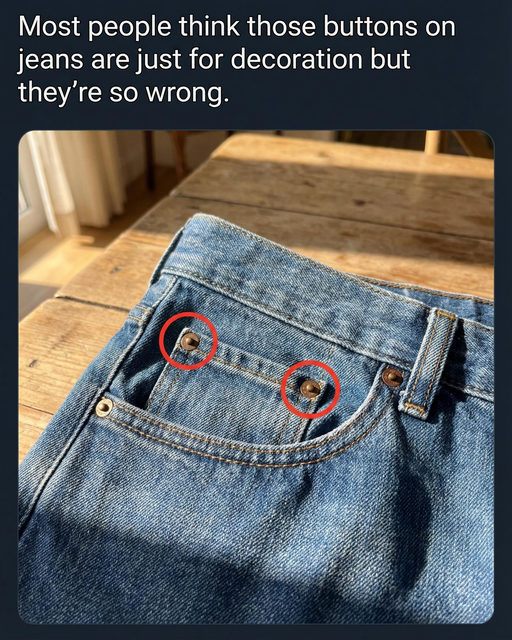
Most people slip into their jeans without giving much thought to the small metal buttons placed near the pockets. These tiny details, often mistaken for decoration, actually serve a practical purpose that has helped denim endure for generations. Known as rivets, they are positioned at stress points where fabric experiences the most strain, such as pocket corners and seams. Every time someone moves, bends, or reaches into a pocket, these areas absorb pressure. Rivets help reinforce the fabric, preventing tears and extending the life of the jeans, proving that durability is often built into the smallest design choices.
The idea of using rivets in clothing dates back to the late nineteenth century, when jeans were primarily workwear. During that time, laborers needed pants that could withstand long days of physical effort. A tailor named Jacob Davis observed that trousers frequently ripped at the seams, especially where pockets were attached. Looking for a solution, he added small metal fasteners to strengthen those weak points. Recognizing the value of the innovation, Davis teamed up with Levi Strauss, and together they patented the design in 1873. This practical improvement quickly gained popularity and became a defining feature of denim garments.
From a structural standpoint, rivets work by spreading stress across a wider area of fabric. Made from sturdy metals such as copper or brass, they resist rust and hold their shape even after years of use. Without rivets, the constant pulling and stretching around pockets can cause fabric to thin or fray. By reinforcing these high-movement zones, rivets help pockets stay secure and maintain their original form. Their effectiveness highlights an important principle in clothing design: thoughtful engineering can significantly improve both comfort and longevity.
In modern fashion, rivets remain a recognizable element of classic denim, though some brands choose alternative reinforcement methods such as bar tacks or double stitching. These updates often aim to increase comfort while preserving strength. Still, rivets continue to symbolize quality craftsmanship and a connection to denim’s working-class roots. They remind us that jeans were originally designed with purpose, not just style in mind. The next time you notice those small metal accents on your favorite pair, you’ll know they represent more than decoration—they carry a legacy of innovation that has shaped how denim is made and worn today.