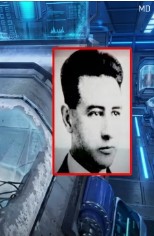
In 1967, Dr. James Hiram Bedford, a World War I veteran and former psychology professor at the University of California, made a decision that would place his name in the history of science. After being diagnosed with kidney cancer that had spread to his lungs, Bedford became interested in an emerging scientific idea known as cryonic preservation. Inspired by Dr. Robert Ettinger’s book The Prospect of Immortality, he chose to have his body preserved after death. At a time when medical technology was far less advanced than it is today, Bedford’s decision reflected curiosity about the future of science and the possibility that later generations might learn from the experiment.
On January 12, 1967, the preservation process was carried out shortly after Bedford’s death. His body was carefully prepared using the cryonic methods available at the time. Blood was removed and replaced with protective chemical solutions intended to help reduce damage caused by freezing. After this preparation, Bedford’s body was placed in a container filled with liquid nitrogen, where temperatures reach around –196 degrees Celsius. The goal of the procedure was not immediate revival, but long-term preservation for research and potential future study as scientific knowledge continued to develop.
Over the decades that followed, Bedford’s case became one of the most widely discussed examples in the field of cryonics. His preserved body was periodically monitored by organizations involved in cryonic research. In 1991, more than two decades after the initial preservation, specialists examined the condition of the remains and reported that many physical structures appeared to have remained relatively stable given the limitations of early cryonic technology. While some external changes were noted, the examination offered insights into how long-term preservation techniques might work over extended periods.
Today, more than half a century later, Dr. Bedford’s body remains preserved in liquid nitrogen. His decision helped bring public attention to the concept of cryonics and encouraged ongoing discussion about the future of science, medicine, and long-term preservation technology. Although the possibility of reviving preserved individuals remains purely theoretical, Bedford’s story continues to represent a unique moment in scientific history. His choice reflected optimism about future discoveries and a willingness to contribute to an experimental idea that still captures the imagination of researchers and the public alike.