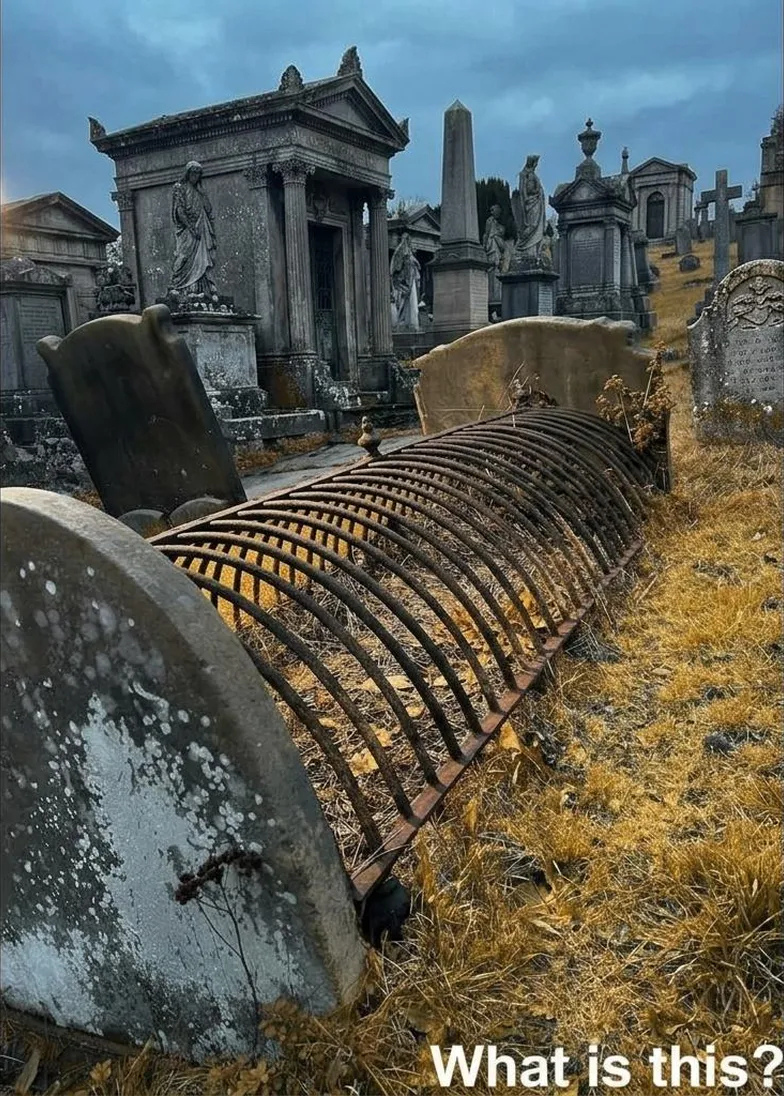
For centuries, cemeteries were designed to be places of peace and remembrance, but in parts of Europe during the 18th and 19th centuries, some families feared that even the grave could not guarantee rest. In several old burial grounds, unusual iron structures known as “mortsafes” still remain as silent reminders of that era. These heavy iron cages were placed over graves to protect the deceased from grave robbers, who illegally removed bodies to supply medical schools with cadavers for anatomical study. During that time, medical education was expanding rapidly, and the demand for bodies often exceeded what the law allowed. As a result, many communities lived with constant concern that newly buried loved ones could be disturbed during the night.
Mortsafes were built to be strong, heavy, and nearly impossible to remove without great effort. Made from thick iron bars and secured tightly over fresh graves, they served as temporary protection during the first weeks after burial. Families would often keep them in place until natural decomposition made the body unsuitable for illegal trade. While the sight of these structures may appear unsettling today, they reflected the deep emotional need families felt to preserve dignity and respect for those they had lost. In many towns, neighbors worked together to guard cemeteries, taking turns watching over burial grounds to prevent unlawful activity. These protective measures became part of everyday life in certain regions during a complicated chapter of history.
Today, surviving mortsafes are viewed not as symbols of fear, but as valuable historical artifacts. They offer insight into a time when medical science, legal systems, and public trust were still evolving together. Over time, governments introduced stricter laws regulating anatomy studies and the legal donation of bodies for medical research. These reforms gradually reduced the need for extreme protective measures in cemeteries. As medicine advanced and ethical standards improved, communities became more confident that burial places would remain undisturbed. The mortsafe eventually disappeared from common use, leaving behind only a few preserved examples for future generations to study and reflect upon.
Standing beside one of these graves today can inspire thoughtful reflection about how societies respond to uncertainty, grief, and change. These iron structures quietly connect the modern world to a past shaped by both scientific progress and human emotion. They remind visitors that history is often built from practical solutions to difficult problems, even when those solutions seem unusual by modern standards. More importantly, they encourage appreciation for the balance modern society strives to maintain between education, ethics, and respect for the deceased. Though centuries have passed, the presence of a mortsafe still tells a meaningful story about protection, remembrance, and the evolution of human values over time.