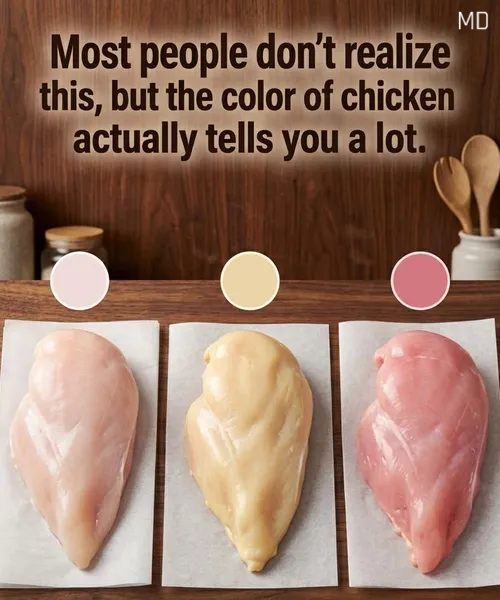
When it comes to chicken, the varying shades of color in the meat can often leave consumers questioning its quality, taste, and healthiness. Some pieces may appear pale or slightly pink, while others seem to have a deeper yellow tone. At first glance, this color difference might lead you to assume certain pieces are healthier or more natural than others. However, color alone isn’t a reliable indicator of a chicken’s quality or freshness. Instead, it can be influenced by several factors, including the bird’s diet, living conditions, and farming practices.
Pale chicken meat is often linked to industrial farming practices, where chickens are raised indoors, fed controlled diets, and bred to grow quickly for mass production. This method is designed to keep costs low and production high, resulting in the pale meat commonly found in many supermarkets. These chickens don’t have the opportunity to roam freely or consume a variety of natural foods, which can affect the color of the meat and, in some cases, the flavor.
In contrast, chicken with a yellowish hue typically comes from birds that are fed diets rich in natural pigments, like carotenoids found in corn, grass, and plants. Chickens raised in more natural environments, with access to open spaces and diverse diets, often develop firmer meat with a richer flavor. These birds tend to be more active, which also contributes to the color and texture of their meat.
However, it’s important to note that some producers may intentionally adjust a chicken’s feed to make its meat appear more yellow, even when the chickens are raised under industrial conditions. As a result, color can sometimes be misleading. To get a clearer understanding of a chicken’s quality, it’s best to look at labels. Terms like “organic,” “free-range,” and “pasture-raised” provide valuable insight into the farming practices behind the product. Additionally, freshness is best judged by the scent and texture of the meat—fresh chicken should have a neutral smell and firm texture. Ultimately, your choice of chicken will depend on your priorities, whether they are cost, flavor, or ethical considerations.