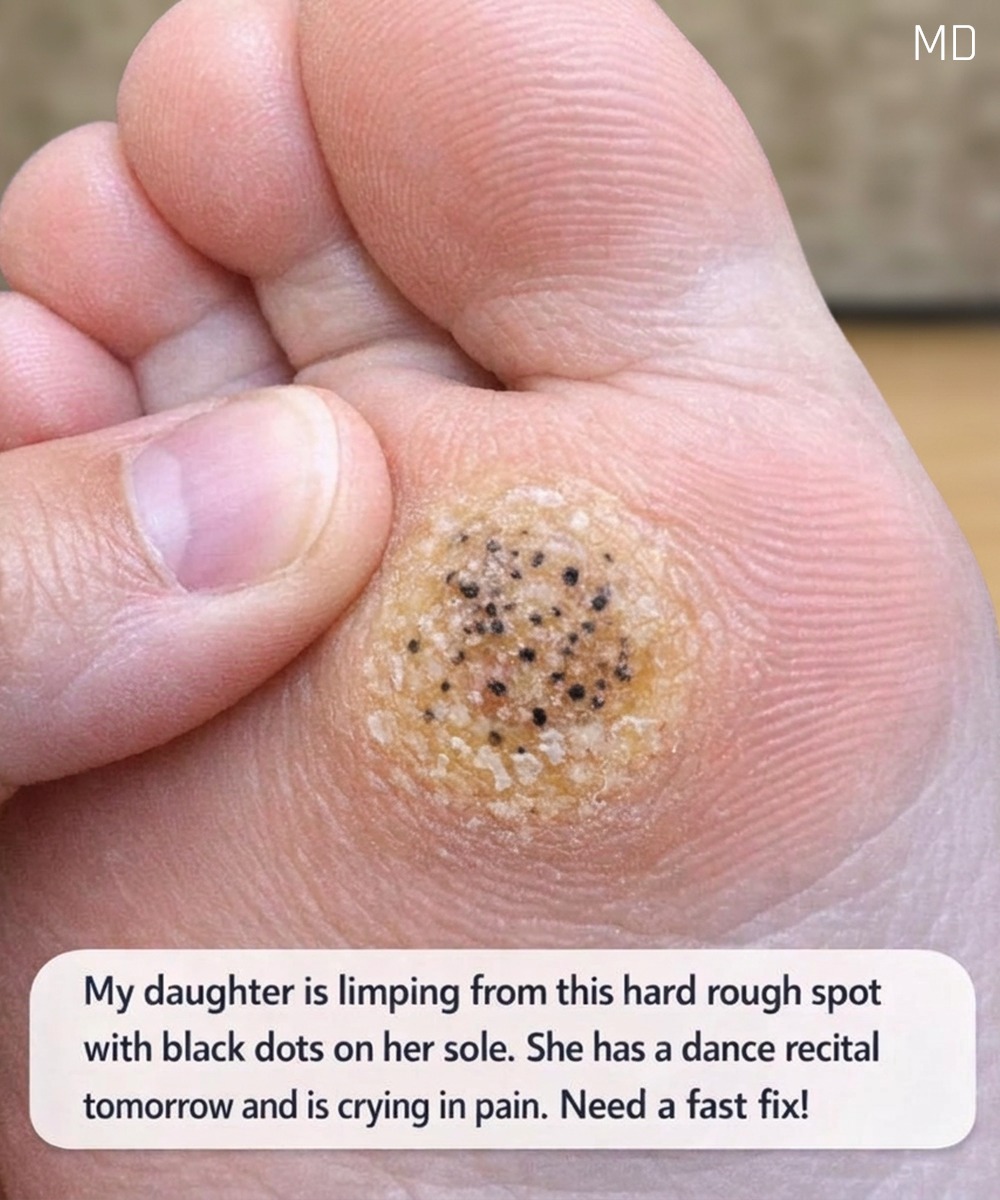
Watching your child deal with pain can be difficult for any parent, especially when it threatens to disrupt something important like a dance recital. If your daughter is limping and you notice a hard, rough spot with tiny black dots on the bottom of her foot, it’s natural to feel concerned. Many parents discover that these symptoms are often linked to a plantar wart, a common foot condition caused by certain strains of the human papillomavirus (HPV). Plantar warts usually appear on weight-bearing areas of the foot, such as the heel or the ball, and the tiny black dots are small clotted blood vessels inside the wart. Because they form where pressure is applied during walking or standing, they can sometimes cause discomfort that makes children hesitant to move normally.
If you’re trying to figure out what the spot might be, it helps to compare it with other common foot issues. Plantar warts typically appear as rough, round patches with tiny dark specks and may feel tender when pressure is applied. A splinter usually has a visible entry point and may show a small object under the skin. Blisters tend to contain fluid and form after friction or irritation, while calluses are thickened skin areas that usually lack the dark dots seen in warts. If the area becomes very painful or if you notice redness, swelling, warmth, or signs of infection, it’s important to contact a healthcare professional for guidance. Medical advice can help ensure the problem is properly identified and treated.
If the goal is to help your child stay comfortable before an upcoming event, a few gentle at-home steps may provide temporary relief. Soaking the foot in warm water for about 10 to 15 minutes can soften the surrounding skin and reduce sensitivity. After drying the foot carefully, over-the-counter treatments containing salicylic acid may be applied according to package directions to gradually soften the wart. Cushioning can also help reduce pressure while walking. Many pharmacies sell donut-shaped pads designed specifically for plantar warts; these pads surround the area so the wart itself isn’t pressed directly against the ground. In some cases, a soft gel insole or extra padding inside a shoe can make movement more comfortable during activities.
Equally important is helping your child feel calm and supported. A dance recital can already bring excitement and nerves, and physical discomfort may make the moment feel more overwhelming. Reassure your child that their well-being matters more than a perfect performance and that it’s okay to adjust if needed. Looking ahead, a few simple habits can help reduce the risk of plantar warts in the future. Wearing protective footwear in shared places like locker rooms or pools, keeping feet clean and dry, and checking for unusual spots on the skin can all help protect growing feet. With a little care, patience, and reassurance, most children recover quickly and return to their activities feeling confident again.