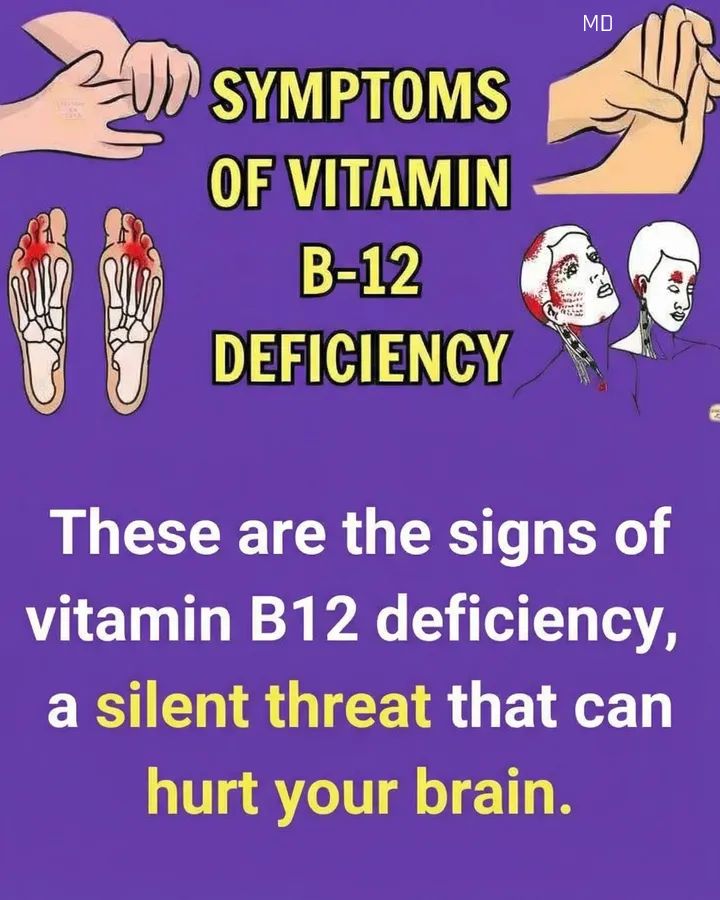
Vitamin B12 is a vital nutrient that supports several essential functions in the body. It helps produce healthy red blood cells, maintains proper nerve function, and plays a role in DNA formation. Because the body cannot produce vitamin B12 on its own, it must be obtained through diet or supplements. As people age, their ability to absorb this nutrient can gradually decline, which makes lower levels more common in older adults. Individuals with certain digestive conditions or those following restrictive diets may also face a higher risk. Since early signs of deficiency can be mild, it often goes unnoticed until symptoms become more pronounced.
One of the most frequently reported signs of low vitamin B12 levels is persistent fatigue. While occasional tiredness is common, ongoing exhaustion that doesn’t improve with rest may signal an underlying issue. Vitamin B12 contributes to the formation of red blood cells, which carry oxygen throughout the body. When levels are insufficient, oxygen delivery may be affected, potentially leading to feelings of weakness or reduced stamina. Some people may also experience lightheadedness, shortness of breath during normal activity, or difficulty concentrating. These symptoms can have many causes, but they may warrant a conversation with a healthcare professional.
Additional signs can sometimes appear as levels drop further. Some individuals notice pale or slightly yellow-toned skin, which may be linked to changes in red blood cell health. Others may develop a smooth, red tongue or mild mouth discomfort. In more advanced cases, nerve-related symptoms such as tingling sensations in the hands and feet, balance issues, or subtle changes in vision may occur. Because these signs overlap with many other conditions, it is important not to jump to conclusions. A simple blood test performed by a qualified medical provider is the most reliable way to assess vitamin B12 status.
There are several possible reasons for developing a deficiency. Reduced stomach acid, certain medications, digestive disorders affecting nutrient absorption, and long-term vegetarian or vegan diets without supplementation can all contribute. To help maintain healthy levels, people can include B12-rich foods such as fish, poultry, lean meats, eggs, and dairy products. Fortified cereals and plant-based milk alternatives can provide additional support for those who limit animal products. In some situations, doctors may recommend oral supplements or injections to restore adequate levels. If you suspect a deficiency, seeking personalized medical advice is the safest and most effective step toward maintaining overall health.