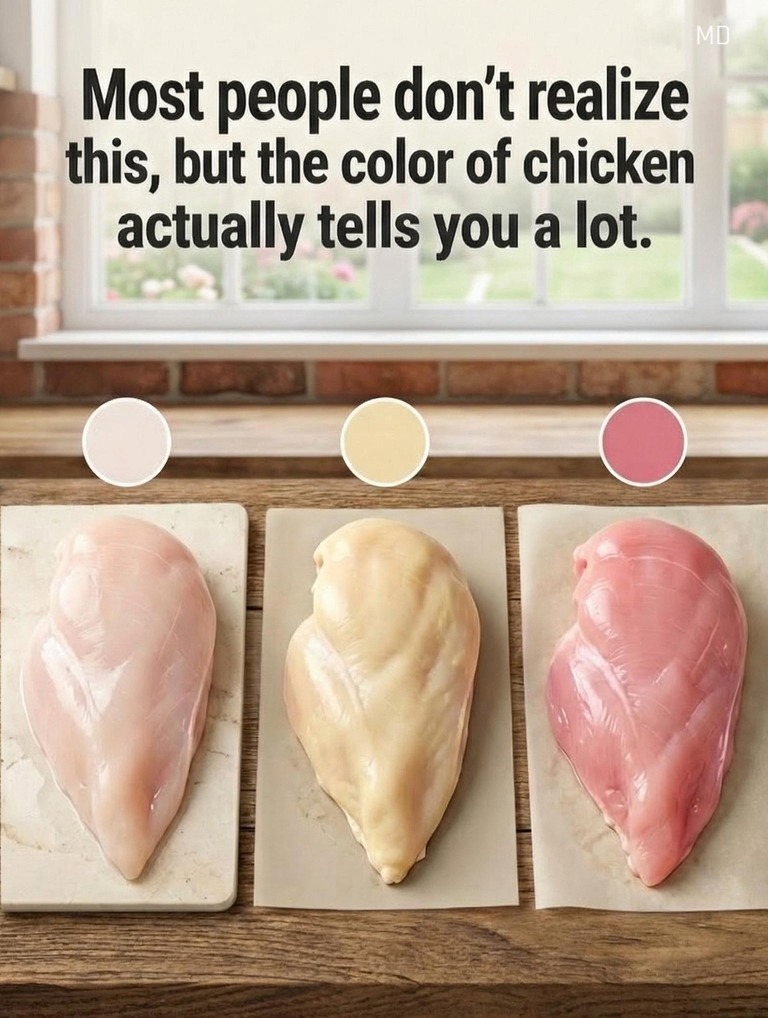
At the grocery store, you may notice that chicken packages can look quite different in color. Some cuts appear pale pink, while others have a deeper yellow tone, even though they are the same type of meat and similarly priced. It’s natural to wonder whether one choice is better than the other. However, color alone is not a reliable indicator of safety or quality, as many factors influence how chicken appears.
One major factor is how the chickens are raised and what they are fed. Chicken that looks lighter in color is often produced in large-scale farming systems, where birds are raised indoors on carefully controlled diets designed for efficiency and consistent supply. This method helps keep prices affordable and ensures a steady availability of poultry in supermarkets.
Chicken with a more yellow appearance often reflects differences in diet, particularly feed that includes ingredients like corn or other natural pigments. Birds that grow more slowly or have more space to move may also develop meat with a firmer texture and richer flavor. Still, color can sometimes be influenced intentionally, as some producers adjust feed simply to match consumer expectations.
In the end, color alone tells only part of the story. Checking labels that describe farming practices, along with paying attention to freshness, smell, and texture, offers better guidance when choosing chicken. The best option depends on personal preference and trust in how the product was raised and handled.