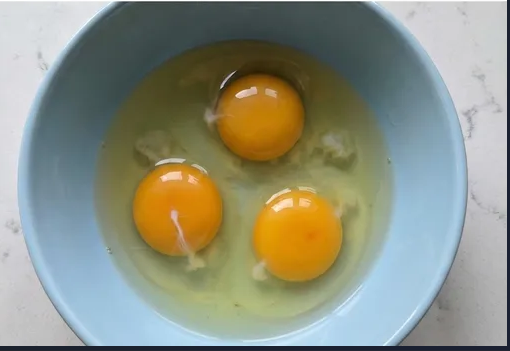
Cracking open an egg can sometimes reveal a thin, white, string-like strand attached to the yolk. For many people, this unexpected detail can look strange or even concerning at first glance. Some assume it means the egg is spoiled or abnormal and may remove it before cooking. In reality, this small feature is completely natural and harmless. In fact, it often indicates that the egg is fresh and well-preserved, making it something to understand rather than fear.
This white strand is called the chalaza, a natural structure made of protein that plays an important role inside the egg. Its purpose is to keep the yolk centered within the egg white, helping to stabilize it as the egg moves. You can think of it as a gentle support system that protects the yolk from bumping against the shell. Most eggs actually have two chalazae, one on each side of the yolk, though one may be more visible than the other when the egg is cracked open.
Interestingly, the appearance of the chalaza can also provide clues about freshness. In newer eggs, the chalaza tends to be firmer and more noticeable, while in older eggs it becomes thinner and less defined. That means seeing a clear, rope-like strand is usually a positive sign rather than a problem. From a nutritional perspective, the chalaza is made of the same type of protein found in egg whites, so it is completely safe to eat. In everyday cooking—such as frying, scrambling, or baking—it blends seamlessly into the egg and disappears once cooked.
There is no need to remove the chalaza unless you are preparing recipes that require an extremely smooth texture, such as custards or fine sauces. Otherwise, it can simply be left in place without affecting taste or quality. Understanding this small detail can make cooking more confident and enjoyable, helping you recognize that what looks unusual is often just a natural part of how food is designed. The next time you notice that white strand in an egg, you’ll know it’s not a flaw—it’s a sign of freshness and a reminder of how thoughtfully nature structures even the simplest foods.