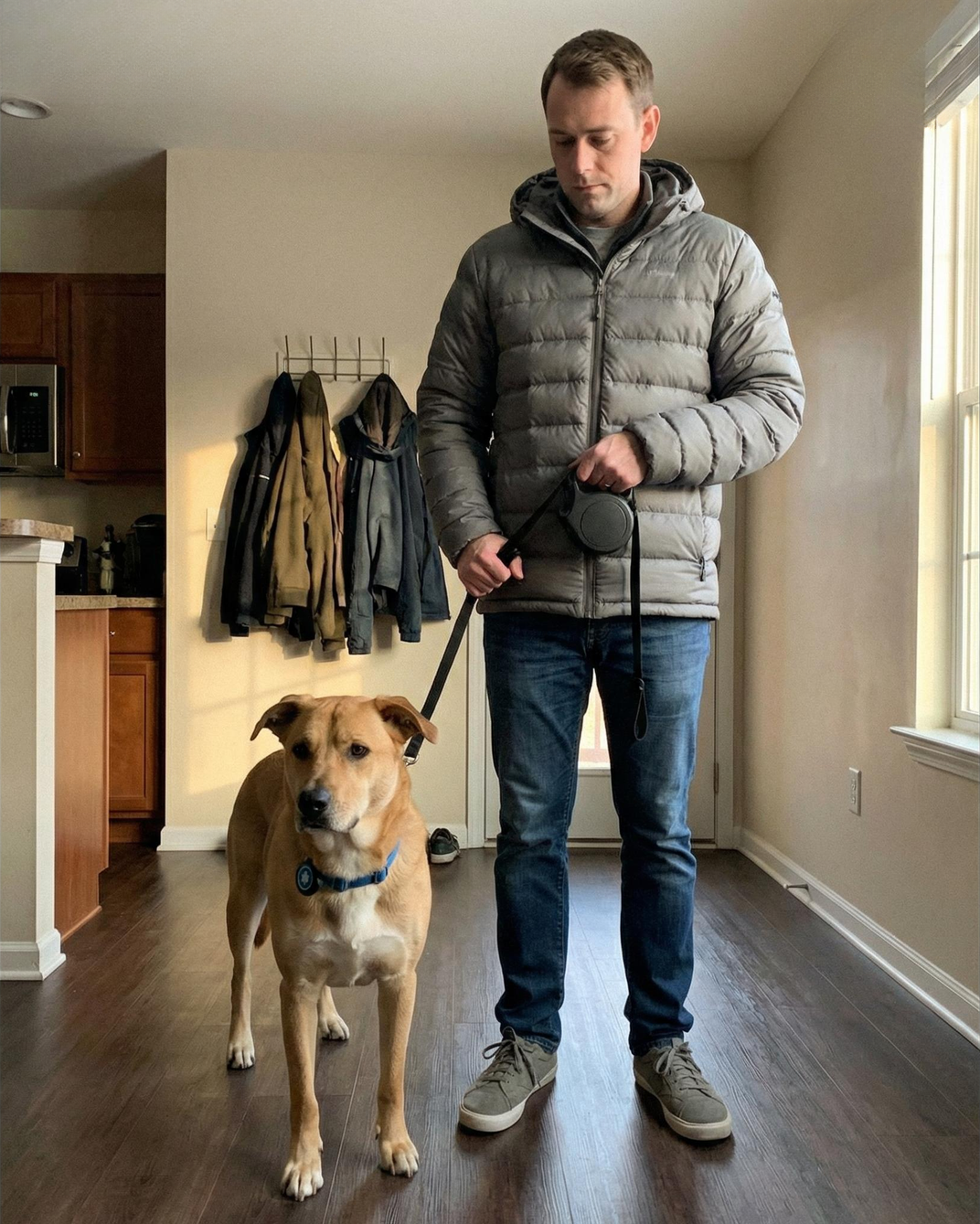
When my husband James began taking our dog Daisy on long evening walks, I didn’t think much of it at first. Life with two young children was busy and noisy, and if walking the dog helped him unwind, I was grateful. James had always wanted a dog, and when we finally adopted Daisy from a shelter, he surprised me by keeping his promise to handle most of her care. The kids adored her, and our home felt warmer with her bounding through the rooms. But after one frightening night when Daisy slipped her collar and ran off, fear settled into our family. We eventually found her trembling under a stranger’s porch, and although everyone was relieved, the experience left me unsettled. The next day, I quietly ordered a GPS collar for Daisy, thinking it was simply a safety measure to protect our family from another scare.
Over the following weeks, James’s nightly walks grew longer. Thirty minutes became an hour, then two, sometimes three. He’d say Daisy had extra energy or that the walks helped him clear his mind. His explanations sounded reasonable, yet something didn’t fit. One night, I woke to an empty bed and a silent house. James and Daisy were both gone. My heart began to race as I opened the tracking app, expecting to see them nearby. Instead, the blinking dot appeared across town, on a quiet street I recognized instantly—the same street where we had once found Daisy hiding after she ran away. Concern pushed me into motion. I drove through empty roads, imagining all kinds of possibilities, unsure of what I might discover.
When I arrived, the porch light of a small cottage glowed softly. James’s phone rang from inside when I called him, confirming he was there. I opened the door and found him standing in the hallway with Daisy at his side. Behind him, in a small room, sat an elderly woman in a rocking chair, and beside her played a young boy with colorful blocks. Confusion washed over me until James gently explained. Months earlier, he had nearly been involved in a serious street accident, and this woman, Carla, had pulled him out of harm’s way. She lived alone with her grandson, Oliver, after losing her own family support. James, grateful and shaken by the experience, had quietly begun visiting them to help with chores, meals, and companionship. He hadn’t told me because I was recovering from a medical procedure at the time, and he didn’t want to worry me. The dog walks had been his cover, his way of giving back without alarming his own family.
Relief replaced suspicion as I listened. Carla smiled kindly, thanking James for his help, and Oliver proudly showed me his block tower. Over tea, the tension faded, replaced by warmth. In the weeks that followed, our entire family began visiting together. We brought groceries, shared meals, and repaired small things around the house. Daisy ran happily in the yard while the children played. What I had once feared turned out to be an act of quiet kindness and gratitude. That night taught me that love sometimes works silently, and that trust grows stronger when truth finally finds its way home.