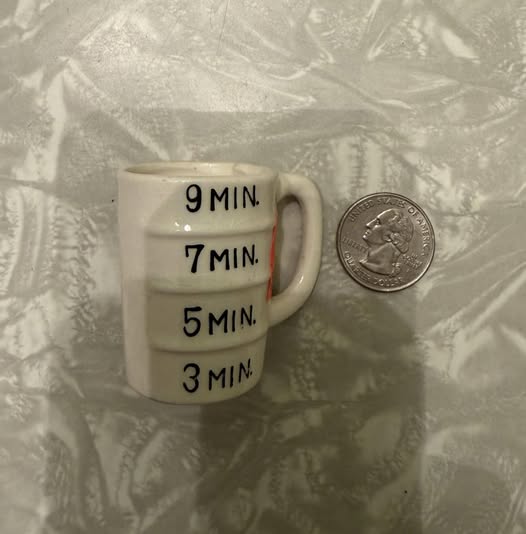
Vintage kitchen tools have a special way of sparking curiosity, especially when their purpose isn’t immediately obvious. One such item is the Howard Electric Egg Boiler, often found at estate sales or thrift shops alongside a tiny ceramic cup covered in mysterious numbers. To many modern shoppers, the cup looks like a miniature mug, a decorative piece, or even a playful accessory with no real function. Its unusual design often leaves people wondering what it was really meant for and why anyone would need something so specific.
The ceramic cup, however, was an essential part of a thoughtfully designed cooking system. The numbers printed on its side—3, 5, 7, and 9—were not time indicators but water measurements. Each marking represented the amount of water needed to cook an egg to a particular level of doneness, from soft to firm. Users simply filled the cup to the chosen line and poured the water into the base of the egg boiler. The egg would sit inside the appliance, gently steaming as the water heated.
What made this device especially clever was its automatic shut-off feature. Once the measured water fully evaporated, the unit turned itself off, signaling that the egg was ready. There was no need to set a timer, watch a pot, or guess cooking times. This made the Howard Egg Boiler a convenient solution for busy mornings, small apartments, or anyone who wanted a quick and tidy way to prepare breakfast. Cleaning was just as simple—rinse the cup and wipe the base, and it was ready for next time.
Today, the Howard Electric Egg Boiler is appreciated not only for its usefulness but also for its vintage charm. Collectors enjoy displaying it alongside classic kitchen appliances, admiring its compact design and clever engineering. More than just a nostalgic object, it represents a time when household inventions focused on making everyday tasks easier through smart, straightforward solutions. This small gadget reminds us that even the simplest meals once inspired creative and efficient designs that still impress us decades later.